Wednesday, December 5, 2018

JESUS THE GREATEST GIFT OF ALL TIME - God’s unspeakable gift to us produces unspeakable joy in us. We who deserve nothing but eternal separation from God in hell, instead will enjoy eternal life with God in heaven. To think that the mighty Creator, God the Son, would not only humble Himself to become His own creature, man, but then also suffer the unimaginable agony of the cross and separation from God the Father in order to deliver us from the just penalty of sin!

Image result for images christ the unspeakable gift
..............................................
Image result for images christ the unspeakable giftHis Unspeakable Gift
Thanks for the Greatest Gift
By Henry M. Morris, Ph.D.
Evidence for Creation
"Thanks be unto God for his unspeakable gift." (2 Corinthians 9:15)
We who have known and sought to follow the Lord for many years have received many, many blessings for which to thank Him.
"Blessed be the Lord, who daily loadeth us with benefits" (Psalm 68:19),
We can pray again and again.
But there is one blessing which is so great that it cannot even be put into words -- it is unspeakable!
That gift is so great that when we try to comprehend it, the sense of awe and gratitude becomes so overwhelming (or at least should become so overwhelming) that our joy is also unspeakable -- indescribable!
That gift, of course, is the gift of the Lord Jesus Christ as our Redeemer and Savior, "Whom having not seen, ye love; in whom, though now ye see him not, . . . ye rejoice with joy unspeakable and full of glory" (1 Peter 1:8).
It is significant that the Greek word translated "unspeakable" occurs only these two times in the entire New Testament.
God’s unspeakable gift to us produces unspeakable joy in us.
We who deserve nothing but eternal separation from God in hell, instead will enjoy eternal life with God in heaven, and all because of that amazing and truly inexpressible gift!
To think that the mighty Creator, God the Son, would not only humble Himself to become His own creature, man, but then also suffer the unimaginable agony of the cross and separation from God the Father in order to deliver us from the just penalty of sin!
This act speaks of such love and grace that all we can do is whisper softly, "Thank you, Lord, for this unspeakable gift."
And then shout it over and over again in our hearts wherever we go, and share its unspeakable joy and blessing with whomever will listen to its message.
"The Lord hath done great things for us; whereof we are glad" (Psalm 126:3).
Thank you, Lord!

Dr. Morris is Chief Executive Officer of the Institute for Creation Research.

 Image result for images christ the unspeakable gift

Image result for images christ the unspeakable giftImage result for images christ the unspeakable giftImage result for images christ the unspeakable gift

Image result for images christ the unspeakable giftImage result for images christ the unspeakable giftImage result for images christ the unspeakable gift

Image result for images christ the unspeakable giftImage result for images christ the unspeakable giftImage result for images christ the unspeakable gift

Image result for images christ the unspeakable giftImage result for images christ the unspeakable giftImage result for images christ the unspeakable gift


Image result for images christ the unspeakable giftImage result for images christ the unspeakable giftImage result for images christ the unspeakable gift


Image result for images christ the unspeakable giftImage result for images christ the unspeakable gift

Image result for images christ the unspeakable giftImage result for images christ the unspeakable giftImage result for images christ the unspeakable gift


Image result for images christ the unspeakable giftImage result for images christ the unspeakable giftImage result for images christ the unspeakable gift


Image result for images christ the unspeakable giftImage result for images christ the unspeakable giftImage result for images christ the unspeakable gift

Tuesday, December 4, 2018

THE VIRGIN BIRTH - The Birth Of Christ Through Mary Or The Incarnation - The doctrine of the virgin birth is one of the foundations and central doctrines of true Christianity. Without it, Christ would be just a "mere man" born of Mary and not the begotten Son of God. If he were anything short of literally God in the flesh, his death would not be able to atone for the sins of all humans who either did or would exist. If Christ were brought into this world as the result of Joseph having sex with Mary, the entire New Testament would be a lie.

Image result for images The Birth Of Christ Through Mary

............................................

The Virgin Birth

Image result for images The Birth Of Christ Through MaryThe Birth Of Christ Through Mary Or The Incarnation


Was Mary a true virgin when she gave birth to Jesus?
Did her conception occur through a supernatural miracle or through a man? 
.
Why does it matter if the Messiah arrived via a virgin or not?
The doctrine of the virgin birth is one of the foundations and central doctrines of true Christianity.
Without it, Christ would be just a "mere man" born of Mary and not the begotten Son of God.
If he were anything short of literally God in the flesh, his death would not be able to atone for the sins of all humans who either did or would exist.
If Christ were brought into this world as the result of Joseph having sex with Mary, the entire New Testament would be a lie.
This is why belief in a virgin birth is so critical. It is a unique Biblical miracle that testifies of His divine origin.
Most Christians, up until the nineteenth century, accepted the Virgin Birth without hesitation until liberal theology began to challenge the Bible's miracles and the divinity of Christ.
Liberal theologians sought to reinterpret Jesus as nothing more than a wise man and good teacher who died in the first century A.D.
They sought to cast doubt on the veracity of the Bible and its miracles like Jesus' entry into the world through a virgin.
Isaiah 7:14 is the only verse in the Old Testament where the miraculous conception and birth of man's Savior is predicted. It states, "Behold, the virgin shall conceive and bear a Son, and shall call His name Immanuel” (Isaiah 7:14, NKJV).
The focus of the attack against the supernatural conception of Christ through Mary centers on the translation of Isaiah 7:14.
The Hebrew word translated "virgin" in the verse is almah (Strong's #H5959).
Some have suggested that almah does not mean a young chaste woman.
They state that Isaiah would have used the Hebrew word bethulah (Strong's #H1330) if he desired to unambiguously write about a young woman who never had sex.
The truth is that almah is the BEST word the prophet Isaiah could have chosen to convey the concept of virginity.
There exists, in the Old Testament, no place where almah requires clarification before it can be translated as referencing a young female of marriageable age.
This is not the case with the word bethulah, which requires clarification (see Genesis 24:16).
The Hebrew word almah is used in only six other places in the Old Testament other than Isaiah 7:14.
In all cases, it references a virgin or 'maid' who is at an age where she can be married and give birth to children.
This is not the case with bethulah, which can refer to a married female (Joel 1:8).
Mary, while she was a virgin betrothed to Joseph, became pregnant with Jesus through the power of the Holy Spirit (Matthew 1:20, Luke 1:31, 34-35).
An angel was sent to Joseph to tell him that Mary's condition did not come through sex but that she would give birth to Christ through a miracle from God (Matthew 1:20-21).
Matthew then quotes Isaiah 7:14, stating "Behold, the virgin (Greek parthenos, Strong's #G3933) shall be with child and shall give birth to a son, and they shall call His name Emmanuel" (Matthew 1:22-23, HBFV).
The Greek word parthenos is used in eleven other places in the New Testament besides Matthew 1:23 and Luke 1:27.
It is consistently translated as "virgin" or its plural and always refers to someone who is chaste physically or in two cases considered so spiritually (see 2 Corinthians 11:2, Revelation 14:4).
The Incarnation, or birth of Christ through Mary, was one of the most anticipated events in human history.
Those living in Jerusalem knew the time of the promised Christ was near (Luke 2:38).
Parthian Magi diligently watched for the manifestation of the King of Kings and rejoiced when they were miraculously led to Him who deserves worship (Matthew 2:1-2).
The religious leaders at the temple also awaited the Messiah and knew he would be born in Bethlehem (Matthew 2:4-6).
The virgin birth through Mary of the One named Immanuel (God WITH us) began the Eternal's glorious plan to redeem us from sin and offer us a way to live in love forever.
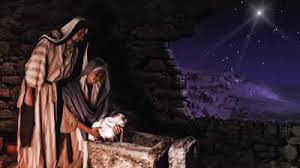
 Image result for images The Birth Of Christ Through Mary

 Image result for images The Birth Of Christ Through MaryImage result for images The Birth Of Christ Through MaryImage result for images The Birth Of Christ Through Mary
Image result for images The Birth Of Christ Through MaryImage result for images The Birth Of Christ Through Mary

Image result for images The Birth Of Christ Through MaryImage result for images The Birth Of Christ Through MaryImage result for images The Birth Of Christ Through Mary

Image result for images The Birth Of Christ Through MaryImage result for images The Birth Of Christ Through MaryImage result for images The Birth Of Christ Through Mary

Image result for images The Birth Of Christ Through Mary

Monday, December 3, 2018

BETHLEHEM IN THE CHRISTMAS STORY - By the time of Jesus' birth, Bethlehem was the city where lambs purchased for sacrifice in the temple were born and raised. In fact, in those days, every first born male lamb in Bethlehem was set aside to later be delivered to Jerusalem. And without coincidence, so was the lamb of God. Indeed, Bethlehem points to the destiny of He who came as God's lamb to later be sacrificed for the sin of the world.


...........................................
Bethlehem In The Christmas Story
The Prophetic Purpose You Likely Never Knew About Jesus’ Birth in Bethlehem
KYLE WINKLER


'Tis the season many reread the Christmas story.
Certainly, Jesus' birth narrative is a cozy beginning to both Matthew's and Luke's Gospels.
Reflecting upon its details of a meager couple, a little town of Bethlehem and a primitive birth tended by shepherds offers a bit of simplicity to the rat race of today's Christmas season.
Unfortunately, though, in all the familiarity of the Christmas story, people often miss the purpose God revealed through every feature.
Yes, the people, place and setting of the story are no coincidental niceties. God didn't select them just for the fun of it.
No, each point to Jesus' destiny, and the reason for His arrival to earth in the first place.
In this article, let's explore why God strategically chose Bethlehem.
Why Bethlehem?
Bethlehem was previously known as the city David was from and where he was crowned king of Israel.
The humble town is approximately six miles south of Jerusalem, where Jesus would later be crucified.
Because of a prophecy foretold by Micah, for some 700 years, God's people looked to Bethlehem as the birthplace of their long-awaited Messiah.
"But you, Bethlehem Ephrathah, although you are small among the tribes of Judah, from you will come forth for Me one who will be ruler over Israel" (Micah 5:2).
The Bible assures God orders the steps of His people (see Psalm 37:23).
Perhaps there is no better example of this promise than how Mary and Joseph found themselves delivering our Messiah in the place that was foretold.
As Luke recorded in his Gospel, while Mary was pregnant with baby Jesus, the Roman emperor decreed that a census be taken (see Luke 2:1).
Consequently, because Joseph was a descendant of David's royal line, the census required he make the several-day journey from his residence in Nazareth to report to his ancestral home — Bethlehem.
And the story is sure to note that Mary makes the journey, too. (One can imagine Mary's accompaniment was not by choice for a woman in her condition, but likely out of obligation to enroll as the new wife of Joseph.)
Consider the precise timing of these events. Just a little longer in Nazareth, and the prophecy of the Messiah's birth in Bethlehem would have failed.
Yet by no planning on Mary's part, nor any intention on the part of the emperor to fulfill any prophecy, Mary and Joseph are brought to Bethlehem.
And at just that moment, Mary goes into labor to deliver Jesus.
What Bethlehem Reveals
Bethlehem's selection by God as the birthplace of the Messiah was no happenstance.
Nor was it chosen only because Joseph's lineage happened to originate there. No, Bethlehem was strategically picked to be part of God's redemption plan from the beginning — that Jesus would come to earth as the final, once-for-all, sacrificial lamb of God (see 1 Peter 1:19–20).
As only God could know, events were orchestrated throughout the centuries, so that by the time of Jesus' birth, Bethlehem was the city where lambs purchased for sacrifice in the temple were born and raised.
In fact, in those days, every first born male lamb in Bethlehem was set aside to later be delivered to Jerusalem.  And without coincidence, so was the lamb of God.
Indeed, as we've reviewed here, Bethlehem points to the destiny of He who came as God's lamb to later be sacrificed for the sin of the world.
And although of monumental importance, this is only one detail of the story.

There's so much more about the story that I explore in my special Christmas message, "Unwrapping the Real Meaning of Christmas." Tune into my inspiring cinematic presentation, and discover what you never knew the Christmas story points to.
Kyle Winkler (kylewinkler.org) is the creator of the popular Shut Up, Devil! mobile app. His latest book is Activating the Power of God's Word: 16 Strategic Declarations to Transform Your Life. Kyle holds a Master of Divinity in biblical studies from Regent University. Connect with him on FacebookTwitter and Instagram.
Get Spirit-filled content delivered right to your inbox! Click here to subscribe to our newsletter.
AMAZING CHRISTMAS DEALS: (1) Buy A Set, Get A Set FREE on all Life in the Spirit Bundles. (2) Save 30%-60% on all Tote Bag plus Book Bundles. (3) Save 50% off Select Bibles plus receive a Free Gift. Visit the Charisma Store to view all our specials. U.S Residents always get FREE Shipping!
Help Charisma stay strong for years to come as we report on life in the Spirit. Become an integral part of Charisma’s work by joining Charisma Media Partners. Click here to keep us strong!

CHRISTMAS TREE ANGELS - Christians took up the practice of placing angel figures at the top of their Christmas trees to symbolize the significance of the angels who appeared over Bethlehem to announce Jesus's birth. The first angel ornaments were handmade ones, such as angel-shaped cookies or angel ornaments fashioned out of natural materials like straw. Angels remain popular Christmas tree decorations today. High-tech angel ornaments implanted with microchips (which enable the angels to glow from within, sing, dance, talk, and play trumpets) are now widely available.

Image result for images Christmas Tree Angels
.........................................
Christmas Tree Angels
Christmas tree angelThe History of Christmas Tree Angels
by Whitney Hopler


Angels are traditionally placed at the top of Christmas trees to represent their role in the birth of Jesus.
Several angels appear in the biblical story of the first Christmas.
Gabriel, the archangel of revelation, informs the Virgin Mary that she will be the mother of Jesus.
An angel visits Joseph in a dream to tell him that he will serve as Jesus's father on Earth.
And angels appear in the sky over Bethlehem to announce and celebrate Jesus's birth.
It's that last part of the story - the angels appearing high above the Earth - that offers the clearest explanation for why angels are placed at the top of Christmas trees.
Early Christmas Tree Traditions
Evergreen trees were pagan symbols of life for centuries before Christians adopted them as Christmas decorations.
Ancient people prayed and worshiped outside among evergreens and decorated their homes with evergreen branches during the winter months.
After the Roman Emperor Constantine selected December 25 as the date to celebrate Christmas, the holiday fell during winter for all of Europe.
It made sense that Christians would adopt regional pagan rituals associated with winter to celebrate the holiday.
In the Middle Ages, Christians began decorating "Paradise Trees" that symbolized the Tree of Life in the Garden of Eden.
They hung fruit from tree branches to represent the biblical story of the fall of Adam and Eve and hung wafers made from pastry to represent the Christian ritual of communion.
The first time in recorded history that a tree was decorated specifically to celebrate Christmas was in Latvia in 1510, when people placed roses on the branches of a fir tree.
The tradition quickly gained popularity, and people began to decorate Christmas trees in churches, town squares, and their homes with other natural materials such as fruit and nuts, as well as with cookies baked in a variety of shapes, including angels.
Tree Topper Angels
Christians eventually took up the practice of placing angel figures at the top of their Christmas trees to symbolize the significance of the angels who appeared over Bethlehem to announce Jesus's birth.
If they didn't use an angel ornament as a tree topper, they usually used a star.
According to the biblical story of Christmas, a bright star appeared in the sky to guide people to Jesus's birthplace.
By placing angels at the top of their Christmas trees, some Christians were also making a statement of faith intended to scare evil spirits away from their homes.
Streamers and Tinsel: Angel 'Hair'
After Christians began decorating Christmas trees, they would sometimes pretend that angels were actually the ones decorating the trees.
This was a way of making the Christmas festivities fun for children.
People wrapped paper streamers around the trees and told children that the streamers were pieces of angel hair that had been caught in the branches when the angels leaned in too closely while decorating.
Later, after people figured out how to hammer out silver (and then aluminum) to produce shiny streamers called tinsel, they used it on their Christmas trees to represent angel hair.
Angel Ornaments
The first angel ornaments were handmade ones, such as angel-shaped cookies or angel ornaments fashioned out of natural materials like straw.
By the 1800s, glassblowers in Germany were making glass Christmas ornaments, and glass angels began to adorn many Christmas trees throughout the world.
After the Industrial Revolution made it possible to mass produce Christmas ornaments, many different styles of angel ornaments were sold in large department stores.
Angels remain popular Christmas tree decorations today.
High-tech angel ornaments implanted with microchips (which enable the angels to glow from within, sing, dance, talk, and play trumpets) are now widely available.

Whitney Hopler
·   Professional writer and editor since 1994, in print and online
·   Communications director for the Center for Advancement of Well-Being at George Mason University
Experience
Whitney Hopler is a former writer for ThoughtCo. She has served as the religion editor for a secular newspaper chain in the Washington, D.C. metropolitan area, as well as an editor at Crosswalk.com and The Salvation Army’s national magazines. Hopler has written for a variety of national publications. She is the communications director for the Center for the Advancement of Well-Being at George Mason University.
Education
Hopler graduated with honors from George Mason University, where she studied comparative religion. She has a certification as a professional technical communicator from the Society for Technical Communications.
Publications
·   "Dream Factory," a novel with spiritual themes
ThoughtCo and Dotdash
ThoughtCo is a premier reference site focusing on expert-created education content. We are one of the top-10 information sites in the world as rated by comScore, a leading Internet measurement company. Every month, more than 13 million readers seek answers to their questions on ThoughtCo.
For more than 20 years, Dotdash brands have been helping people find answers, solve problems, and get inspired. We are one of the top-20 largest content publishers on the Internet according to comScore, and reach more than 30% of the U.S. population monthly. Our brands collectively have won more than 20 industry awards in the last year alone, and recently Dotdash was named Publisher of the Year by Digiday, a leading industry publication.
 Image result for images Christmas Tree Angels
Image result for images Christmas Tree AngelsImage result for images Christmas Tree Angels