Showing posts with label Four horsemen of the Apocalypse. Show all posts

Tuesday, May 5, 2020

PESTILENCE AND DISEASE ON A GLOBAL SCALE - In the Olivet Prophecy, Jesus Christ predicted the signs that would precede His return, including pestilence and disease on a global scale - a parallel prophecy is found in Revelation 6, which describes the Four Horsemen of the Apocalypse - the fourth horseman pictures the outbreak of pestilences that will ravage a quarter of the earth’s population – Coronavirus, West Nile virus, Zika, Ebola, H1N1 avian influenza, swine flu, Middle East respiratory syndrome (MERS), severe acute respiratory syndrome (SARS), yellow fever, hantavirus, Nipah, Hendra, Marburg, chikungunya, dengue. Another virus with a peculiar name always seems to be lurking around the corner, poised to become the next global health emergency. Infectious disease outbreaks are increasing in frequency and severity, and the number of unique pathogens responsible for disease is growing. Emerging viruses often have no effective treatment, cure or vaccine, and the possibility of preventing or controlling them is extremely limited. A reemerging disease is caused by a virus, bacterium, parasite or fungus that has long existed and was once thought to be controlled or wiped out, but is now making a comeback. These diseases are often spreading geographically, usually in a more virulent or drug-resistant form. Today there are antibiotic-resistant strains of tuberculosis, malaria, cholera, diphtheria, staphylococcus, streptococcus and salmonella — to name a few “superbugs” that have made their debut in recent times.

Why the Surge in Infectious Diseases?
Open Access Immunology Journals with high Impact factor
................................................................................................................................................................
Infectious Diseases Insurance: Best Plans to Protect YourselfPestilence And Disease On A Global Scale
Why the Surge in Infectious Diseases?
.
Study finds a link between infectious diseases and racism in the ...In the Olivet Prophecy, Jesus Christ predicted the signs that would precede His return, including pestilence and disease on a global scale - a parallel prophecy is found in Revelation 6, which describes the Four Horsemen of the Apocalypse - the fourth horseman pictures the outbreak of pestilences that will ravage a quarter of the earth’s population.
by Becky Sweat


Why is the world facing epidemic after epidemic of new and reemerging infectious diseases?
What are we doing wrong, and how will the ultimate healing come?
Certain Antidepressants Could Be Effective at Treating Multiple ...Coronavirus, West Nile virus, Zika, Ebola, H1N1 avian influenza, swine flu, Middle East respiratory syndrome (MERS), severe acute respiratory syndrome (SARS), yellow fever, hantavirus, Nipah, Hendra, Marburg, chikungunya, dengue.
Another virus with a peculiar name always seems to be lurking around the corner, poised to become the next global health emergency.
Just in the last few years we’ve witnessed the Ebola epidemic in western Africa in 2014, MERS outbreaks in the Arabian Peninsula in 2014 and Korea in 2015, and the spread of the Zika virus throughout most of the Americas at the close of 2016.
Then the novel coronavirus started spreading at the end of 2019 and was declared a pandemic by the World Health Organization (WHO) on March 11, 2020.
At that time 114 countries had reported that 118,000 people had contracted Covid-19 (the disease caused by the novel coronavirus), and more than 4,000 people had died.
WHO Director-General Tedros Adhanom Ghebreyesus said, “We expect to see the number of cases, the number of deaths, and the number of affected countries climb even higher.”
The novel coronavirus
Emerging Infectious DiseasesBBC reported: “The bad news, as Covid-19 reminds us, is that infectious diseases haven’t vanished. In fact, there are more new ones now than ever: the number of new infectious diseases like Sars, HIV and Covid-19 has increased by nearly fourfold over the past century. Since 1980 alone, the number of outbreaks per year has more than tripled …
“As Covid-19 is painfully demonstrating, our interconnected global economy both helps spread new infectious diseases – and, with its long supply chains, is uniquely vulnerable to the disruption that they can cause. The ability to get to nearly any spot in the world in 20 hours or fewer, and pack a virus along with our carry-on luggage, allows new diseases to emerge and to grow when they might have died out in the past” (“Covid-19: The History of Pandemics”).
Sounding the alarm about infectious disease epidemics
No proof of asymptomatic transmission of coronavirus: Infectious ...Public health officials worldwide have been sounding the alarm for many years: Infectious disease outbreaks are increasing in frequency and severity, and the number of unique pathogens responsible for disease is growing.
One of the most urgent warnings came in 2016 from then WHO Director-General Margaret Chan: “What we are seeing now looks more and more like a dramatic resurgence of the threat from emerging and re-emerging infectious diseases,” she stated. “The world is not prepared to cope.”
But what exactly is meant by emerging and reemerging diseases?
An emerging pathogen is one that is appearing in the human population for the first time and has never been recognized before.
According to the WHO, at least 40 new infectious diseases have emerged since the 1980s, at a rate of one or more per year.
Examples include Ebola, HIV/AIDS and Lyme disease.
Emerging viruses often have no effective treatment, cure or vaccine, and the possibility of preventing or controlling them is extremely limited.
The majority of emerging pathogens are zoonotic—meaning they are transmitted between animals and people — which makes them particularly challenging.
“Zoonotic diseases cannot usually be eradicated due to the fact that it is not possible to eliminate all of the animal reservoirs or vectors that might be carrying the zoonosis,” explains David Freedman, M.D., professor of medicine and epidemiology at the University of Alabama.
reemerging disease is caused by a virus, bacterium, parasite or fungus that has long existed and was once thought to be controlled or wiped out, but is now making a comeback.
These diseases are often spreading geographically, usually in a more virulent or drug-resistant form.
Today there are antibiotic-resistant strains of tuberculosis, malaria, cholera, diphtheria, staphylococcus, streptococcus and salmonella — to name a few “superbugs” that have made their debut in recent times.
Each year, the number of infections and deaths caused by superbugs continues to rise.
The Review on Antimicrobial Resistance, a 2016 report published in the U.K., predicts that by 2050, 10 million people globally will die each year from antibiotic-resistant bacteria alone, based on current trends.
Factors behind the trends
What a contrast to the optimism of 50 years ago!
Then U.S. Surgeon General William Stewart famously proclaimed, “The time has come to close the book on infectious diseases. We have basically wiped out infection in the United States.”
So why are we now seeing a surge in infectious disease epidemics?
The most straightforward answer comes from the Bible.
In the Olivet Prophecy, Jesus Christ predicted the signs that would precede His return, including pestilence and disease on a global scale (Matthew 24:3-8; Luke 21:11).
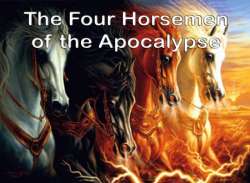
A parallel prophecy is found in Revelation 6, which describes the “Four Horsemen of the Apocalypse.”
The fourth horseman (verses 7 and 8) pictures the outbreak of pestilences (in addition to the sword and hunger) that will ravage a quarter of the earth’s population.
The latter part of verse 8 refers to death resulting from the “beasts of the earth.”
This could very well include the animals that transmit infectious diseases.
In addition to looking at Bible prophecies, we can observe specific factors that are helping cause the problems.
Many health experts, like biotech consultant Thomas Monath, M.D., believe mankind is actually creating its own disease problems, albeit unintentionally.
“We’re making changes in our environment or lifestyles to cause the emergence or spread of disease,” he says.
Some of the primary ways humans have paved the way for modern disease epidemics include:
• Encroachment on animal habitats.
The number of people on planet earth has soared from 2.5 billion in 1950 to 7.5 billion in 2016. This has prompted people to settle in wilderness areas where only animals had lived.
“Environments in the developing world used to be quite remote but are now much less so as a result of human activities like deforestation, dam projects, irrigation, road construction and extensive agriculture,” says James Hughes, M.D., professor of medicine and public health at Emory University.
When people enter these ecosystems, they often encounter new pathogens not found anywhere else.
Once infected, they spread the pathogen wherever they go.
• Urbanization and overcrowding.
Increasing numbers of people, particularly in the developing world, are moving from rural areas to large urban centers, seeking work. Many end up living in overcrowded “megacities” with 10 million or more residents.
According to a 2016 report from the United Nations Human Settlements Programme, there are now 29 megacities in the world (up from 14 in 1995), and 79 percent of them are in developing nations.
With high population densities, megacities are ideal breeding grounds for disease.
Furthermore, the typical megacity’s infrastructure isn’t prepared to handle its swelling population.
“Water and sanitation systems are often inadequate or nonexistent, so residents must drink water that’s contaminated with bacteria and sewage,” Dr. Freedman says.
“Hospitals may be in short supply, so those who are ill may not be able to get the medical care they need.”
• Eating exotic animals.
Some cultures have a long tradition of eating exotic wildlife.
Africa has its bush meat trade, where monkeys, apes, aardvarks, rats and other wild animals are hunted and sold for food.
The Chinese have their open-air wet markets, where exotic creatures like civets, snakes, tree shrews, bats, badgers and pangolins are sold live to consumers, who will then slaughter and consume them.
“Any viruses carried by these animals can be transmitted to people via consumption, if people handle the animals, or sometimes if they just come into the same air space,” explains Dr. Hughes.
However, the issue is more than just the transmission of an animal pathogen to a human.
The ultimate concern is that close contact with infected animals or consuming them can cause a new pathogen to emerge.
Simply put, if a human infected with a virus comes in contact with an animal that has a similar type of virus, the genetic material of the two pathogens can get “mixed up” and recombine.
This can result in a new virus that infects both animals and people.
This process has caused the emergence of some of the world’s deadliest diseases.
For instance, HIV is a fusion of the Simian Immunodeficiency Virus (SIV) that infects monkeys and apes, and a similar type of virus that infects people.
Scientists believe that HIV originated from butchering chimpanzees for bush meat.
• Changes in sexual behavior and IV drug use.
Up until the mid-20th century, having multiple sexual partners was frowned upon by most people.
However, in Western society today, having multiple sexual partners before marriage is not only acceptable, but has become the norm.
Additionally, intravenous drug use has become rampant, with drug users often sharing injection paraphernalia.
Both trends have fueled the spread of HIV, hepatitis C, genital herpes and other sexually transmitted diseases — all of which are transmitted through bodily fluids.
• Improper use of antibiotics.
Overuse of antibiotics has created new antibiotic-resistant bacteria.
According to the Centers for Disease Control and Prevention (CDC), up to 50 percent of antibiotics used in hospitals and clinics are either unnecessary or inappropriate.
Often what happens is patients insist on having antibiotics when they have a cold or the flu (which is almost always caused by a virus and won’t respond to antibiotics), and doctors give in to these demands.
Or physicians might prescribe antibiotics when they can’t make a definite diagnosis, “just in case” bacteria are present.
Ultimately, disease outbreaks and pandemics are a result of mankind’s broken relationship with God.
When a particular drug is prescribed too much, bacteria can build defenses against it.
Dr. Hughes explains, “This drug resistance is then transferred to the next generation of that bacteria, effectively rendering that particular medication useless.”
Bacteria can develop resistance to multiple drugs, eventually becoming the virtually untreatable, so-called superbugs.
Biblical perspectives on disease and health
Several of the factors just discussed are direct violations of biblical instruction.
For one, Leviticus 11 and Deuteronomy 14 spell out which animals should and shouldn’t be eaten.
Many of the diseases plaguing our modern world wouldn’t be problems if people weren’t eating “unclean,” exotic animals, which carry disease-causing organisms not present in domesticated “clean” animals.
Deuteronomy 23:13 says that human waste should be buried away from where people live.
This prevents food and water supplies from becoming contaminated.
It’s no wonder that diseases like diarrhea, dysentery, hookworm, roundworms, cholera and typhoid — which all result from contact with human waste — are rampant in shantytowns that do not have sanitation systems.
In Leviticus 18 and 20 God prohibits extramarital and premarital sex and other unhealthy sexual practices.
There’s no question that this kind of sexually immoral behavior has contributed greatly to the spread of AIDS and other sexually transmitted diseases.
Ultimately, disease outbreaks and pandemics are a result of mankind’s broken relationship with God.
When God brought the Israelites out of Egypt, He told them they could avoid the curse of disease if they obeyed His commandments and statutes (Exodus 15:26).
On the other hand, there would be consequences for disobedience, which included disease epidemics (Deuteronomy 28:15, 21-22, 27-28).
The Israelites — like all people before and since — disobeyed God, and mankind continues to reap the consequences of sin.
Today, humanity as a whole is cut off from God and vulnerable to the ravages of disease. This won’t always be the case though.
When Jesus Christ returns to earth and the Kingdom of God is established, mankind will at last be united with our Creator and receive all the blessings of living God’s way of life — which includes good health and a world free of disease outbreaks.

Becky Sweat is a member of the Church of God, a Worldwide Association.
Undergraduate Certificate in Infectious Diseases | Institute of ...
Microbiology and Infectious Diseases | NIH Intramural Research Program
Division of Infectious Diseases | Department of Medicine in Ottawa
Infectious Disease Online - Dr Sampurna Roy MD

Thursday, February 13, 2020

THE FOUR HORSEMEN OF THE APOCALYPSE - Jesus opens the book of the future, the book of prophecy, which is sealed with seven seals, and shows the apostle John the future of the world from that time (about 90 AD) to the last days (the time in which we are now living) and beyond. Another name for the book of Revelation is the Apocalypse, which means “a revelation concerning the future.” The four horsemen of the Apocalypse reveal the truth about religion, war, and economics, and set the stage for what is soon to come. The first horseman, who wears a crown and goes forth to conquer, is obviously Jesus. From the spiritual realm, the resurrected Jesus was going forth to “conquer” the world with the Gospel through His apostles and the early Christians — and they would eventually conquer the mighty Roman Empire. Jesus’ message of the love and forgiveness of God would prove more powerful than all the legions of Rome! Jesus is this mighty Conqueror on the white horse.


Image result for images The Ministry of Angels: End Times
................................................................................................................................................................. 
The Four Horsemen of the Apocalypse
Joseph Candel


HAVE YOU EVER WONDERED WHY WE HAVE WAR, or why there is such a disparity of wealth — why some people and whole nations are rich and overfed while others are starving and deprived of other basic necessities?
Why do governments spend billions on wars that kill and maim while the poor continue to suffer?
I used to wonder why the world is the way it is, why there couldn’t be more love and peace and cooperation among people and nations to make the world a better place.
I found the answer to that in the Bible, beginning with Revelation chapter 6, about the four horsemen of the Apocalypse.
In Revelation chapter 6, Jesus opens the book of the future, the book of prophecy, which is sealed with seven seals, and shows the apostle John the future of the world from that time (about 90 AD) to the last days (the time in which we are now living) and beyond.
Another name for the book of Revelation is the Apocalypse, which means “a revelation concerning the future.”
The four horsemen of the Apocalypse reveal the truth about religion, war, and economics, and set the stage for what is soon to come.
The first seal
“And I saw when the Lamb [Jesus] opened one of the seals, and I heard, as it were the noise of thunder, one of the four beasts saying, ‘Come and see.’ And I saw, and behold, a white horse: and He that sat on him had a bow; and a crown was given unto Him: and He went forth conquering, and to conquer.” (Revelation 6:1–2 KJV.)
The first horseman, who wears a crown and goes forth to conquer, is obviously Jesus.
What was happening at this time in world history, in about 90 AD?—>
From the spiritual realm, the resurrected Jesus was going forth to “conquer” the world with the Gospel through His apostles and the early Christians — and they would eventually conquer the mighty Roman Empire.
Jesus’ message of the love and forgiveness of God would prove more powerful than all the legions of Rome! Jesus is this mighty Conqueror on the white horse.
We find another picture of a white horse in Revelation chapter 19: “And behold a white horse; and He that sat upon him was called Faithful and True. ... His name is called The Word of God” (Revelation 19:11,13 KJV).
We know from John 1:14 that “The Word of God” is Jesus: The Word became flesh and dwelt among us, and we beheld His glory, the glory as of the only begotten of the Father, full of grace and truth.”
And following Jesus are the armies of Heaven, the resurrected saints who are also riding white horses as they come down from Heaven to defeat the forces of the Antichrist and take over the world at the Battle of Armageddon (Revelation 19:14).
The second seal
“And when He had opened the second seal, I heard the second beast say, ‘Come and see.’ And there went out another horse that was red: and power was given to him that sat thereon to take peace from the earth, and that they should kill one another: and there was given unto him a great sword.” (Revelation 6:3–4 KJV.)
What takes “peace from the earth”? — War!
This red horse symbolizes war, the military and their war machines.
The horse’s color, red, is appropriate because it represents all the blood shed in man’s hellish wars — wars for which God is not responsible, but which come from the pride, prejudices, and avarice of man’s heart.
“From whence come wars and fightings among you? Come they not hence, even of your lusts that war in your members?” (James 4:1 KJV).
The “great sword” given to the rider of the red horse seems to suggest the great “improvements” in weapons of war and the vastly greater devastation bought on by war since this prophecy was given in John’s day.
The third seal
“And when He had opened the third seal, I heard the third beast say, ‘Come and see.’ And I beheld, and lo a black horse; and he that sat on him had a pair of balances in his hand. And I heard a voice in the midst of the four beasts say, ‘A measure of wheat for a penny; and three measures of barley for a penny; and see thou hurt not the oil and the wine.’” (Revelation 6:5–6 KJV.)
This black horse’s rider with the pair of balances in his hand symbolizes the rich capitalists that have a major impact on world conditions through their manipulation of national economies.
Only one other verse in the Bible pictures a man with balances, or scales: “The merchant uses dishonest scales; he loves to defraud” (Hosea 12:7 NIV).
Another prophet, Amos, also said that the merchants — the wealthy capitalists of his day who were robbing the poor instead of helping them — “set forth wheat, making the ephah [unit of measure] small, and the shekel [price] great, and falsifying the balances by deceit ... that swallow up the needy, even to make the poor of the land to fail” (Amos 8:4–6 KJV).
The black horse, then, represents famine and poverty perpetrated by the rich who refuse to share with those in need.
This horse is largely responsible for today’s economic situation. Oil and wine, throughout the Scriptures, symbolize abundance or luxury.
The fact that the oil and wine were “hurt not” indicates a situation where wealth and luxury exist alongside famine and poverty — and the gulf between rich and poor is only growing.
The fourth seal
“And when He had opened the fourth seal, I heard the voice of the fourth beast say, ‘Come and see.’ And I looked, and behold, a pale horse. And his name that sat on him was Death, and Hell followed with him. And power was given unto them over the fourth part of the earth, to kill with the sword, and with hunger, and with death, and with the beasts of the earth.” (Revelation 6:7–8 KJV.)
The fourth and final horseman of the Apocalypse is death itself — death not only from war, but also from beasts and plagues and famine and death in every other conceivable form.
Death has always been with us, of course, but death by famine, natural disasters, new plagues such as AIDS, and new pestilences such as the Ebola virus have reached unprecedented levels, just like Jesus said they would immediately prior to His return: “Nation will rise against nation, and kingdom against kingdom. And there will be famines, pestilences, and earthquakes in various places” (Matthew 24:7).
The fifth seal
“And when He had opened the fifth seal, I saw under the altar the souls of them that were slain for the Word of God, and for the testimony which they held: And they cried with a loud voice, saying, ‘How long, O Lord, holy and true, dost Thou not judge and avenge our blood on them that dwell on the earth?’ And white robes were given unto every one of them; and it was said unto them, that they should rest yet for a little season, until their brethren, that should be killed as they were, should be fulfilled.” (Revelation 6:9–11 KJV.)
First comes the white horse, the proclamation of its rider’s message, and the “conquest” of many souls.
Then comes the open rejection of that message by the unbelievers, those in league with the other three horsemen on the red, black, and pale horses, which crystallizes into persecution and the martyrdom of “them that were slain for the Word of God.”
This is the way it’s been all throughout history. These martyrs, though, are actually the exception.
Most of Jesus’ followers have usually escaped martyrdom and lived on to help carry on His work.
War, greed, and death — the characters that were revealed when the second, third, and fourth seals were opened — are almost as old as the world itself, but the Biblical picture both here and elsewhere is that each of these forces has taken on greater power since the time of this revelation.
Again, Jesus predicted this in His famous Endtime discourse, Matthew chapter 24, and said that it would culminate in “great tribulation, such as has not been since the beginning of the world until this time, no, nor ever shall be. And unless those days were shortened, no flesh would be saved; but for the elect’s sake those days will be shortened” (Matthew 24:7, 21–22).
In other words, Jesus was saying, one day man would reach such an impasse that if God were to let him continue unchecked, he would annihilate himself.
However, when man finally reaches that suicidal point, Jesus said that God would step in and stop man.
And the way God will stop him is at the Battle of Armageddon that happens shortly after Jesus’ Second Coming & the Resurrection & Rapture.
First the Saints will go to the Marriage Supper of the Lamb (Revelation 19:7-9) & then return with Jesus probably sometime near the end of Wrath of God & defeat the Antichrist & his forces at the Battle of Armageddon. (Revelation 19:11-21; Revelation 16:16-21)
Only within the last 60 or 70 years has the human race developed the potential to destroy itself.
The military (red horse) now have their nuclear bombs, intercontinental missiles, chemical and biological weapons, and other lethal technologies.
The rich, on their black horse, were complicit in the last century’s great wars, and their hoarding and misuse of their riches is threatening another one.
The rich also, in their relentless pursuit of greater wealth, are finally succeeding in polluting the entire earth — a byproduct of modern technology.
And following the others comes the fourth horseman, on the pale horse — death in every form.
So, there you have the four horsemen of the Apocalypse. They will continue to ride until the End, when Jesus returns to take us to heavenly places with Him, before pouring out His judgments on the perpetrators of the hell on earth below.
Then He will come back once more — He and all the saints of God — to wipe out the Antichrist and all of his forces at the Battle of Armageddon.
God will then cleanse and purify the earth and set up His eternal kingdom, ruled by Jesus Christ & His Saints.

The Countdown site is devoted to exploring the mysteries of Bible prophecies about the “last days” which presage the end of this world as we know it, and to keeping a watchful eye on the “signs of the times” that the Bible indicates will foreshadow these events.
Countdown features news articles, blog posts, and editorials that address current events, trends, culture, and technological advances, in light of biblical prophecy.
Image result for images armageddon apocalypseImage result for images armageddon apocalypseImage result for images armageddon apocalypse
Image result for four horsemen gotquestions..orgImage result for images armageddon apocalypseImage result for images armageddon apocalypse