........................................................................................................................................................................................................................................................................................

Milk in the Bible
Food and Symbolism
in Scripture
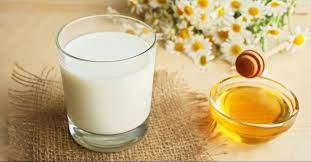
Isaiah prophesied about Jesus as a child and mentioned him eating
(drinking) milk (or curds) and honey
.
 Milk
isn’t just for infants or children or a simple ingredient in cooking. It is simple
and filled with nutrients (physical and spiritually). But, is compared with
meat or solid food in the Bible, indicating that milk is less hearty or easier
to digest than meat or other solid food.
Milk
isn’t just for infants or children or a simple ingredient in cooking. It is simple
and filled with nutrients (physical and spiritually). But, is compared with
meat or solid food in the Bible, indicating that milk is less hearty or easier
to digest than meat or other solid food.
.
 Milk gives sustenance but that many
are not yet ready for solid food (deeper teaching). Most milk came from cows,
sheep and goats. In the Old Testament, milk is most
often mentioned with honey to symbolize blessing and abundance. Milk in the
Bible has also been used to symbolize whiteness and as a symbol of marital
bliss.
Milk gives sustenance but that many
are not yet ready for solid food (deeper teaching). Most milk came from cows,
sheep and goats. In the Old Testament, milk is most
often mentioned with honey to symbolize blessing and abundance. Milk in the
Bible has also been used to symbolize whiteness and as a symbol of marital
bliss.
.
 All references to the meaning of milk in the Bible, found in the New
Testament, are symbolic. Each refers to the basics of Christian life. In
biblical times, people could live on milk only for perhaps days, but eventually
would need more substance. Similar to our walk as Christians.
All references to the meaning of milk in the Bible, found in the New
Testament, are symbolic. Each refers to the basics of Christian life. In
biblical times, people could live on milk only for perhaps days, but eventually
would need more substance. Similar to our walk as Christians.
SUSAN NELSON
Milk in the Bible

And,
each time it is mentioned, it refers to a spiritual blessing!
What Type of Milk Was Mentioned in the Bible?
“On that day I swore
to them that I would bring them out of Egypt into a land I had searched out for
them, a land flowing with milk and honey, the most beautiful of all lands.” – Ezekiel 20:6
“They gave Moses
this account: 'We went into the land to which you sent us, and it does flow
with milk and honey! Here is its fruit.'”
– Numbers 13:27
Many
assume that the milk referred to was from nuts, such as almonds.
However,
if we look a few more verses, we will learn that couldn’t be correct.
“The men did so, and
took two milk cows and yoked them to the cart and shut up their calves at
home.” –
1 Samuel 6:10 (ESV)
“He then brought
some curds and milk and the calf that had been prepared, and set these before
them. While they ate, he stood near them under a tree.” – Genesis 18:8
“For pressing milk produces curds, pressing
the nose produces blood, and pressing anger produces strife.” – Proverbs 30:33 (ESV)
Curds can only be produced from animal milk – not nuts or other sources of milk. Clearly, the milk referred to in these verses is from cows or goats.
The Meaning of Milk in the Bible

Milk
isn’t just for infants or children or a simple ingredient in cooking.
It is
simple and filled with nutrients (physical and spiritually).
“Like newborn
babies, crave pure spiritual milk, so that by it you may grow up in your
salvation,” –
1 Peter 2:2
But, is
compared with meat or solid food in the Bible, indicating that milk is less
hearty or easier to digest than meat or other solid food.
“I gave you milk,
not solid food, for you were not yet ready for it. Indeed, you are still not
ready.” –
1 Corinthians 3:2
“In fact, though by
this time you ought to be teachers, you need someone to teach you the
elementary truths of God’s word all over again. You need milk, not solid food!” – Hebrews 5:12
Milk
gives sustenance but that many are not yet ready for solid food (deeper
teaching).
Milk in the Old Testament
There
are many variations of words for milk and milk products in the Old Testament,
but milk clearly was a staple of the Hebrew diet.
Variations
of the word include sweet milk, soured milk (This soured milk was carried by
travelers who mixed it with meat, dried it, and then dissolved it in water to
make a refreshing drink such as that set by Abraham before the messengers (Genesis
18:8 ), cheese, butter, curds and symbols of blessing and abundance.
As
mentioned above, most milk came from cows (Isaiah 7:21-22), sheep
and goats (Proverbs 27:27 ; Deuteronomy 32:14 ); and of
course, humans (Isaiah 28:9).
Butter
and cheese were also made and eaten by those in Old Testament times (1
Samuel 17:18) as well as curdled, sour milk which still forms, after bread.
It was
one of the main foods of the poorer classes in Arabia and Syria.
After
setting awhile, the drink (sour milk) would carry an intoxicating effect
leading some to believe that the fermented variety is the drink that Jael gave
to Sisera (Judges 4:19).
It is
interesting to note that Abraham was from a pastorate tribe who traveled with
the growing seasons to allow animals to graze, making milk one of the main (and
often only) sources of nutrition?
Additionally
(and this is a good one!), Isaiah prophesied about Jesus as a child and
mentioned him eating (drinking) milk (or curds) and honey?
“He will be eating
curds and honey when he knows enough to reject the wrong and choose the right,” – Isaiah 7:15
In the
Old Testament, milk is most often mentioned with honey to symbolize blessing
and abundance. Here are some of the most common references to milk and honey in
the Bible (Old Testament):
“And I have promised
to bring you up out of your misery in Egypt into the land of the Canaanites,
Hittites, Amorites, Perizzites, Hivites and Jebusites—a land flowing with milk
and honey.’” –
Exodus 3:17
“But I said to you, ‘You
will possess their land; I will give it to you as an inheritance, a land
flowing with milk and honey.’ I am the Lord your God, who has set you apart
from the nations.” –
Leviticus 20:24
“Hear, Israel, and
be careful to obey so that it may go well with you and that you may increase
greatly in a land flowing with milk and honey, just as the Lord, the God of
your ancestors, promised you.” –
Deuteronomy 6:3
“The Israelites had
moved about in the wilderness forty years until all the men who were of
military age when they left Egypt had died, since they had not obeyed the Lord.
For the Lord had sworn to them that they would not see the land he had solemnly
promised their ancestors to give us, a land flowing with milk and honey.” – Joshua 5:6
Milk in
the Bible has also been used to symbolize whiteness (Lamentations 4:7) and as
a symbol of marital bliss (Song of Solomon 4:11).
Puzzling Reference to Milk in the Bible

It is
mentioned several times in the Old Testament including in the below scriptures.
“Bring the best of the firstfruits of your
soil to the house of the Lord your God. Do not cook a young goat in its
mother’s milk.” – Exodus 23:19
“Do not eat anything
you find already dead. You may give it to the foreigner residing in any of your
towns, and they may eat it, or you may sell it to any other foreigner. But you
are a people holy to the Lord your God. Do not cook a young goat in its
mother’s milk.” –
Deuteronomy 14:21
Biblical
scholars have argued that this meant milk and meat should not be cooked or
eaten together.
Other
scholars believe that it relates to the Canaanite sacrifices, but there is not
conclusive evidence to support either theory.
Hebrew Words for Milk and Milk Products in the Bible
It is
intriguing to me that the Hebrews have many different words for milk and milk
products, in the New Testament, the Greeks have a fraction of that number.
Here
are the most commonly used Hebrew words for milk and milk products in the Old
Testament.
Chalab -
milk
חָלָב (khaw-lawb’)
Matsats
- to drain out, to suck
מָצַץ (maw-tsats’)
Yanaq -
to suck, give milk, nursing mother, give, make to sucking
child, nurse, nursing
יָנַק (yä·nak’)
Atin - pail,
bucket, breast. From an unused root meaning apparently to contain; a receptacle
(for milk, ie Pail; figuratively, breast)
עֲטִין - (at-een’)
Ul - to
suckle or give milk, to nurse, a suckling child or a few days’ old infant
עוּל (ool)
Qapha’
- Thicken (as unracked wine, curdled milk, clouded sky,
frozen water), congeal, curdle, dark, settle.
קָפָא (kaw-faw’)
Chemah -
Butter, curd. From the same root as chowmah; curdled
milk or cheese.
חֶמְאָה (khay-maw’)
Gebinah
- Cheese, curd. Feminine from the same as gibben;
curdled milk or cheese.
גְּבִנָה (gheb-ee-naw’)
Milk in the New Testament
Variations
of the word milk are only found five times in the New Testament (compared to
over forty times in the Old Testament).
All
references to the meaning of milk in the Bible, found in the New Testament, are
symbolic. Each refers to the basics of Christian life.
In
biblical times, people could live on milk only for perhaps days, but eventually
would need more substance. Similar to our walk as Christians, right?
“I gave you milk,
not solid food, for you were not yet ready for it. Indeed, you are still not
ready.” –
1 Corinthians 3:2
“Who serves as a
soldier at his own expense? Who plants a vineyard and does not eat its grapes?
Who tends a flock and does not drink the milk?” – 1 Corinthians 9:7
“In fact, though by
this time you ought to be teachers, you need someone to teach you the
elementary truths of God’s word all over again. You need milk, not solid food! 13 Anyone who lives on
milk, being still an infant, is not acquainted with the teaching about
righteousness.” –
Hebrews 5:12-13
“Like newborn
babies, crave pure spiritual milk, so that by it you may grow up in your
salvation,” –
1 Peter 2:2
Greek Words for Milk and Milk Products in the Bible

Gala - milk
γάλα (gal’-ah)
Thelazo
- to suckle, to nurse or suck milk.
θηλάζω (thā-lä’-zō)
Achreioo
- to make useless, turn sour (as in milk)
ἀχρειόω (akh-ri-o’-o)
Interesting Facts About Other Dairy Products in the Bible
Cheese
is mentioned as food only twice in the Bible
In the
NIV and ESV versions of the Bible, the word “cheese,”
or curdled milk, appears four times and only once as food.
“Did you not pour me
out like milk and curdle me like cheese,”
– Job 10:10
In
this verse, Job is lamenting to God about his life and all that has befallen
him.
He asks
God, “did you not pour me out like milk
and curdle me like cheese”.
Likely,
he was referring to curdled milk since prior to Job, there were no other
references to cheese as a food and Job was written before 1 Samuel, the first
biblical reference to cheese as food.
The first mentions of cheese in the Bible as food
“Take along these
ten cheeses to the commander of their unit. See how your brothers are and bring
back some assurance from them.”
– 1 Samuel 17:18
“honey and curds,
sheep, and cheese from cows’ milk for David and his people to eat. For they
said, ‘The people have become exhausted and hungry and thirsty in the
wilderness.’” –
2 Samuel 17:29
In the
above scripture, David’s son Absalom had stood up against his father.
As
David and his supporters were advancing, three men from Ammon and Gilead
(unbelievers), brought food, including cheese, and other items to assist and
sustain them.
Butter,
on the other hand is mentioned at least nine times, all in the Old Testament
and always in reference to a food (as opposed to symbolic).
From Milk to Meat, Sermon on Spiritual Milk and the Christian
Walk
While
researching this post, I came across this sermon from Stillwater Bible Church
about milk and the Christian walk. It’s less than thirty minutes and makes some
interesting points.
What
was your biggest takeaway from this post on the meaning of milk in the Bible?
I’d love to hear your thoughts. Drop a comment below and share.
Because
of Him,
Sue
SUSAN NELSON
Susan
is a writer, speaker and the creator of Women of Noble Character ministries.
She is passionate about helping Christian women deepen their walk with God
through Bible study and creative worship and strengthen their marriages.
She
lives in rural North Central Missouri with her handsome and hilarious husband
and a myriad of dogs, cats and chickens.
Susan
runs on Jesus, coffee and not enough sleep.