Thursday, July 30, 2020

COULD JESUS RETURN AT ANY MOMENT? - “The judge stands before the door.” Jesus Christ as the Judge of believers took His position of the door of Heaven and was standing there. The Lord could come as the Judge of Heaven through that door of Heaven at any moment and then immediately, Christians would stand before Him at the Judgment Seat of Christ. Just as it was imminent back then, the Lord could have stepped through the door of Heaven at any time. The same is true today — Christ could step through the door of Heaven at any moment, and we who are believers in Jesus Christ would be ushered into His presence and then would stand before Him at the Judgment Seat of Christ to have our works evaluated by the Lord. The New Testa¬ment teaches the imminency of the Lord’s return, and that means that Christ could return at any moment. Even back in New Testament times He could have returned at any moment. Now, He hasn’t yet, but it was possible back then. The imminency concept carries with it the idea that there may be many things that WOULD happen before Christ comes, but biblically there’s nothing that HAS to happen before the Lord Jesus would come to rapture the Church out of the world to be with Him in the Father’s house in Heaven. The Thessalonian Christians had the attitude of waiting up for God’s Son to come from Heaven tells us that they were expecting Him to come from Heaven at any moment.


..................................................................................................................................................

Coronavirus revelation: Bible expert warned of pandemic in 2005 ...Could Jesus Return At Any Moment?
.
10 Things That Will Happen When JESUS RETURNS! - YouTube“The judge stands before the door.” Jesus Christ as the Judge of believers took His position of the door of Heaven and was standing there. The Lord could come as the Judge of Heaven through that door of Heaven at any moment and then immediately, Christians would stand before Him at the Judgment Seat of Christ. Just as it was imminent back then, the Lord could have stepped through the door of Heaven at any time. The same is true today — Christ could step through the door of Heaven at any moment, and we who are believers in Jesus Christ would be ushered into His presence and then would stand before Him at the Judgment Seat of Christ to have our works evaluated by the Lord 
By: Dr. Renald Showers 
John Ankerberg Show


Does the Bible indicate that it’s possible for the Lord Jesus to return even today to rapture His Bride the Church out of the world?
Growing in GraceI’m convinced that it does indicate that. The New Testa­ment teaches the imminency of the Lord’s return, and that means that Christ could return at any moment.
Even back in New Testament times He could have returned at any moment.
Now, He hasn’t yet, but it was possible back then.
And the imminency concept carries with it the idea that there may be many things that WOULD happen before Christ comes, but biblically there’s nothing that HAS to happen before the Lord Jesus would come to rapture the Church out of the world to be with Him in the Father’s house in Heaven.
Now, where do we get this concept that the Lord could come at any moment, maybe even today?
Well, there are a number of passages in the New Testament that really convey that concept and I’d like to deal perhaps with just three of them for our study today.
First, in 1 Corinthians 16:22, the Apostle Paul said to the Corinthian Christians, “If any man love not the Lord Jesus Christ, let him be anathema.”
And then Paul interjected at the end of this verse, interesting expression, “Maranatha!”
Now, what does that term mean?
Well, it’s very interesting to note that that word was derived from the Aramaic language.
Let me explain.
The Aramaic language was the language that was spoken in the land of Israel during Jesus’ day.
From all we can discern, that was even the language the Jesus spoke while He was here in the world.
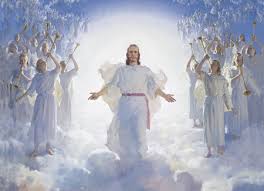
Chapter 24: Preparing for the Second Coming of Jesus ChristIt was kind of a mixture of Hebrew and importing things from other languages where the Jews had lived over the centuries.
This was an Aramaic expression.
In fact, “Maranatha” is made up of three Aramaic words: the first one is the word MAR which meant “Lord,” and then the next one is ANA which means “Our,” and the third was THA which means “Come.”
So, putting it together, Maranatha means “Our Lord, come.”
The interesting thing is, this was in the form of a petition so that when Christians would make that statement, as Paul did here, he was actually petitioning the Lord to come.
Now, the question is, “Why petition the Lord to come if He can’t come at any moment?”
If you know that He can’t come until a year from now, or ten years from now, or a hundred or a thou­sand years from now, it would really be useless to be petitioning the Lord as if He could come right now.
Another intriguing thing about this is that, although this is an Aramaic expression which ap­parently began with Jewish believers in the Lord Jesus in the land of Israel during the first cen­tury, here Paul uses this word to Greek speaking people at a Greek Church in the city of Corinth.
And he’s writing it in a letter that he wrote in the Greek language.
So, scholars have asked the question: “Why would Paul throw out an Aramaic term at people who knew the Greek language and in a Greek book that he’s writing?”

Chapter 24: Preparing for the Second Coming of Jesus ChristScholars have concluded that the reason for that is that this expression had become a widespread expression by Chris­tians all over the ancient world.
Even though they may not have known any other expression in the Aramaic language, they learned what this one meant, so they used it as a byword.
Some feel they even used it as a greeting when they would see each other to identify themselves as believers.
They would say, “Maranatha” (Our Lord, come.)
But again, it’s conveying a concept that the Lord could come at any moment, otherwise, why petition Him to come?
It’s imminency that’s being conveyed here.
A second significant passage out of many others in the New Testament on the imminency of the Lord’s return is 1 Thessalonians 1:10.
Here the Apostle Paul is in this context is talking about commendable attitudes or deeds which were characteristic of the Thessalonians Chris­tians of this time.
11 Powerful Bible Passages About the End Times and Jesus' ReturnAnd one of those commendable attitudes or actions was this: they were “wait­ing for God’s Son from Heaven.”
Now, some fascinating things about the verb form translated “wait.”
That word literally meant “to wait up for,” and it was used back in the ancient world for people who were waiting up for the arrival of a person whom they were expecting to come.
Now, the idea behind that is, they were waiting up for this arrival.
It’s the idea that they didn’t go to bed at their normal time.
And the reason they wouldn’t go to bed at their normal time was because they were expecting this person could arrive at any moment.
If they knew that this person couldn’t arrive, say, for another four, five, six hours, the normal thing for them would not be to wait up but to go to bed for the four, five or six hours, set the alarm clock (if they had alarm clocks at that time), and then wake up at the time that they knew the person would arrive. 
.
So the very fact that Paul says that the Thessalonian Christians had the attitude of waiting up for God’s Son to come from Heaven tells us that they were expecting Him to come from Heaven at any moment.
Another interesting thing about this term, and scholars point this out, is that this indicates patience and confidence.
And in addition, it’s in the present tense and normally in the original language of the New Testament the present tense, unless the context tells us otherwise, has the idea of a continuous action.

Asteroid WARNING: Asteroid Apophis will hit Earth on April 13 ...So, Paul was teaching here that the Thessalonian Christians were “continuously” and “patiently” awaiting the Lord’s coming, waiting up for Him to come, because they were confident that He could come at any moment.
Again, the idea is, they believed in the imminent return of the Lord Jesus.
Now, a question we could ask at this point was this: Where did they get this idea from, that the Lord could return at any moment?
Well, when you read the book of Acts, which records what Paul did when he went to the city of Thessalonica on one of his missionary journeys, we find that Paul is the one who taught them what they knew about the Scriptures and the truth of God.
When you read 1 Thessalonians there are several indications.
Paul reminds them of things that he had taught them when he was with them.
So if the Apostle Paul had been their major teacher of God’s truth, to my way of thinking, that implies that Paul was the one who had taught them of the imminent coming of Christ, that He could come from Heaven at any moment for His believers to take them home to glory to be with Him.
It’s very intriguing to notice as well that Paul did not rebuke them or correct them for having this expectation and this attitude and there’s no indication that he rebuked them or corrected them at all.
In fact, when you read the context, he seems to be commending them for having this attitude.
So, I get the distinct impres­sion that Paul was fully convinced himself that the Lord come return at any moment, and there­fore they were right in having this expectancy.
Then, a third passage that I’d like to focus our attention upon for the imminency of the Lord’s return is in James 5.
We want to begin with verse 7: “Be patient, therefore, brethren, unto the coming of the Lord; behold the husbandman waits for the precious fruit of the earth and has long patience for it until he receive the early and latter rain. Be you also patient; establish you hearts, for the coming of the Lord draws nigh. Grudge not one against another, brethren, lest you be condemned. Behold, the Judge stands before the door.”
I’d like to draw your attention to two verb forms that James uses here.
At the end of verse he says, “the coming of the Lord draws nigh.”
And then in verse 9, “the judge stands before the door.”
A very important thing to note here is that, in the original language that James wrote, both of those verbs are in what the Greeks called the perfect tense.
And the significance of the Greek perfect tense was that it is referring to an action that was completed in the past, but then there is a resultant state that continues on from that action.
It just continues on indefinitely.
What James is indicating there is this: that the Lord’s coming had already drawn near before James wrote this letter and the Lord’s coming continues to be near at hand, even while James wrote the letter and it would continue thereafter.
And as well, “the judge stands before the door.”
He was saying that there’s a sense in which Jesus Christ as the Judge of believers took His position of the door of Heaven and was standing there.
He even took that position and began to stand there before James wrote this epistle and He continues to stand at the door of Heaven.
A number of scholars that I researched on this said James is trying to emphasize to his readers the imminency of the Lord’s return.
The idea is, the Lord could come as the Judge of Heaven through that door of Heaven at any moment and then immediately, Christians would stand before Him at the Judgment Seat of Christ.
They have their works as believers evaluated by the Lord.
It’s imminency that he’s talking about here. And I’m convinced that just as it was imminent back then, the Lord could have stepped through the door of Heaven at any time.
The same is true today — Christ could step through the door of Heaven at any moment, and we who are believers in Jesus Christ would be ushered into His presence and then would stand before Him at the Judgment Seat of Christ to have our works evaluated by the Lord.

Real Answers to Real Questions
For more than 37 years The John Ankerberg Show has offered Real Answers to Real Questions and presented and defended the Christian faith. In all areas of ministry and through a variety of media outlets, our mission is to provide answers to tough theological questions in order to proclaim biblical truth, encourage the believer, and challenge the skeptic.


You might also like:


.

Imminence of Christ’s Return

CLICK HERE . . . to view . . . 

https://puricarechronicles.blogspot.com/2020/10/imminence-of-christs-return-can-return.html

.....................................................................................................................................................................................................................

Blessed Hope

CLICK HERE . . . to view . . . 

https://puricarechronicles.blogspot.com/2018/09/blessed-hope-word-blessed-can-mean.html

....................................................................................................................................................................................................................

The Parousia

CLICK HERE . . . to view . . . 

https://puricarechronicles.blogspot.com/2020/11/the-parousia-in-discussing-parousia-one.html

.....................................................................................................................................................................................................................

Be Vigilant

Prepare but don’t Fear

CLICK HERE . . . to view . . . 

https://puricarechronicles.blogspot.com/2020/02/be-vigilant-prepare-but-dont-fear.html

....................................................................................................................................................................................................................

Christ's Second Coming to the Earth

CLICK HERE . . . to view . . . 

https://puricarechronicles.blogspot.com/2019/12/sound-trumpet-christs-second-coming-to.html

.....................................................................................................................................................................................................................

Reasons to Talk about Prophecy

CLICK HERE . . . to view . . . 

https://puricarechronicles.blogspot.com/2019/05/biblical-prophecy-life-in-this-fallen.html

....................................................................................................................................................................................................................

This  Generation?

CLICK HERE . . . to view . . . 

https://puricarechronicles.blogspot.com/2019/05/this-generation-70th-anniversary-of.html

.....................................................................................................................................................................................................................

The Great Tribulation

CLICK HERE . . . to view . . . 

https://puricarechronicles.blogspot.com/2018/11/the-last-days-end-time-or-great.html

What does it mean to watch and pray? | GotQuestions.org
Planet X: World ending Saturday? Here are 8 times it didn't

BIBLICAL HERMENEUTICS - Biblical hermeneutics is all about finding the correct interpretation of the inspired text. The purpose of biblical hermeneutics is to protect us from misapplying Scripture or allowing bias to color our understanding of truth. God’s Word is truth. We want to see the truth, know the truth, and live the truth as best we can, and that’s why biblical hermeneutics is vital. Scripture is always the best interpreter of Scripture - we always compare Scripture with Scripture when trying to determine the meaning of a passage - Biblical hermeneutics is the study of the principles and methods of interpreting the text of the Bible. Second Timothy 2:15 commands believers to be involved in hermeneutics: “Do your best to present yourself to God as one approved, a worker who . . . correctly handles the word of truth.” The purpose of biblical hermeneutics is to help us to know how to properly interpret, understand, and apply the Bible. The most important law of biblical hermeneutics is that the Bible should be interpreted literally. We are to understand the Bible in its normal or plain meaning, unless the passage is obviously intended to be symbolic or if figures of speech are employed. The Bible says what it means and means what it says. Biblical hermeneutics keeps us faithful to the intended meaning of Scripture and away from allegorizing Bible verses that should be understood literally.

Biblical Hermeneutics - Sound Doctrine 101
...............................................................................................................................................
Interpreting the Bible - Institute of Faith Education
Biblical Hermeneutics
.
Bible & Theology Degree | Multnomah UniversityBiblical hermeneutics is all about finding the correct interpretation of the inspired text. The purpose of biblical hermeneutics is to protect us from misapplying Scripture or allowing bias to color our understanding of truth. God’s Word is truth. We want to see the truth, know the truth, and live the truth as best we can, and that’s why biblical hermeneutics is vital. Scripture is always the best interpreter of Scripture - we always compare Scripture with Scripture when trying to determine the meaning of a passage
What is biblical hermeneutics?
Got Questions Ministries


Biblical hermeneutics is the study of the principles and methods of interpreting the text of the Bible. 
Second Timothy 2:15 commands believers to be involved in hermeneutics: “Do your best to present yourself to God as one approved, a worker who . . . correctly handles the word of truth.”
Commentaries – #POPChristThe purpose of biblical hermeneutics is to help us to know how to properly interpret, understand, and apply the Bible.
The most important law of biblical hermeneutics is that the Bible should be interpreted literally.
We are to understand the Bible in its normal or plain meaning, unless the passage is obviously intended to be symbolic or if figures of speech are employed.
The Bible says what it means and means what it says.
For example, when Jesus speaks of having fed “the five thousand” in Mark 8:19, the law of hermeneutics says we should understand five thousand literally — there was a crowd of hungry people that numbered five thousand who were fed with real bread and fish by a miracle-working Savior.
About the Inerrancy of Scripture | FAQs | EEWC-Christian Feminism ...
Any attempt to “spiritualize” the number or to deny a literal miracle is to do injustice to the text and ignore the purpose of language, which is to communicate.
Some interpreters make the mistake of trying to read between the lines of Scripture to come up with esoteric meanings that are not truly in the text, as if every passage has a hidden spiritual truth that we should seek to decrypt.
Biblical hermeneutics keeps us faithful to the intended meaning of Scripture and away from allegorizing Bible verses that should be understood literally.
A second crucial law of biblical hermeneutics is that passages must be interpreted historically, grammatically, and contextually.
Bachelor's in Biblical Studies | School of Divinity | Liberty ...Interpreting a passage historically means we must seek to understand the culture, background, and situation that prompted the text.
For example, in order to fully understand Jonah’s flight in Jonah 1:1–3, we should research the history of the Assyrians as related to Israel.
Interpreting a passage grammatically requires one to follow the rules of grammar and recognize the nuances of Hebrew and Greek.
For example, when Paul writes of “our great God and Savior, Jesus Christ” in Titus 2:13, the rules of grammar state that God and Savior are parallel terms and they are both in apposition to Jesus Christ — in other words, Paul clearly calls Jesus “our great God.”
Hermeneutics: the Eight Rules of Biblical InterpretationInterpreting a passage contextually involves considering the context of a verse or passage when trying to determine the meaning.
The context includes the verses immediately preceding and following, the chapter, the book, and, most broadly, the entire Bible.
For example, many puzzling statements in Ecclesiastes become clearer when kept in context—the book of Ecclesiastes is written from the earthly perspective “under the sun” (Ecclesiastes 1:3).
In fact, the phrase under the sun is repeated about thirty times in the book, establishing the context for all that is “vanity” in this world.
.
A third law of biblical hermeneutics is that Scripture is always the best interpreter of Scripture.
For this reason, we always compare Scripture with Scripture when trying to determine the meaning of a passage.
For example, Isaiah’s condemnation of Judah’s desire to seek Egypt’s help and their reliance on a strong cavalry (Isaiah 31:1) was motivated, in part, by God’s explicit command that His people not go to Egypt to seek horses (Deuteronomy 17:16).
Some people avoid studying biblical hermeneutics because they mistakenly believe it will limit their ability to learn new truths from God’s Word or stifle the Holy Spirit’s illumination of Scripture.
Art & Science of Biblical Interpretation – Hermeneutics ...But their fears are unfounded.
Biblical hermeneutics is all about finding the correct interpretation of the inspired text.
The purpose of biblical hermeneutics is to protect us from misapplying Scripture or allowing bias to color our understanding of truth.
God’s Word is truth (John 17:17).
We want to see the truth, know the truth, and live the truth as best we can, and that’s why biblical hermeneutics is vital.

Got Questions Ministries seeks to glorify the Lord Jesus Christ by providing biblical, applicable, and timely answers to spiritually related questions through an internet presence."
GotQuestions.org is a ministry of dedicated and trained servants who have a desire to assist others in their understanding of God, Scripture, salvation, and other spiritual topics. We are Christian, Protestant, evangelical, theologically conservative, and non-denominational. We view ourselves as a para-church ministry, coming alongside the church to help people find answers to their spiritually related questions.
What is biblical hermeneutics? | GotQuestions.org
Summary: the Bible on women and authority | PsephizoCan Christian woman teach other women the Bible? | Biblical Gender ...Defining Biblical Hermeneutics - Biblical Archaeology Society
The History of Biblical Hermeneutics – Christian Publishing House BlogBiblical Interpretation: Can We Get It Right? | Christian Feminism ...What is Hermeneutics? The Biblical Purpose & Meaning
Encore: Biblical Interpretation and Q&A | Christian Research InstituteBiblical InterpretationThe Relevance of Biblical Hermeneutics for the Christian Life ...
AN INTRODUCTION TO BIBLICAL HERMENEUTICS" - CHRIST BIBLE CHURCHWelcome to the home page of Christian Feminism Today!BIBLICAL HERMENEUTICS: How to study and interpret the Bible ...
Sending Children the Right Message About The Bible

Wednesday, July 29, 2020

YOU’VE GOT TODAY - How much time do you have? Only today is the correct answer. Who knows what tomorrow may hold? Don’t wait until a doctor quietly suggests that you put your financial house in order because there is no hope for you before you decide what is important, how you want to live, and how to make peace with God. Today is the day to put your house in order - it’s the only day that is really yours. “For dead men cannot praise you. They cannot be filled with hope and joy. The living, only the living, can praise you as I do today. One generation makes known your faithfulness to the next.” What you thought was important pales in comparison because you were alerted for the knock of the grim reaper, and suddenly the darkness gives way to the dawn of hope. One of the ways that God’s Word is timeless is the way it chronicles the very emotions and experiences of life which confront us today. Some 2,700 years ago, a man became ill. He was king, but when death stares you in the face, it doesn’t matter whether you are wealthy or poverty stricken. The hospital gown, which barely is broad enough to cover your backside, fits the wealthy and powerful just the same as those on welfare. “In those days Hezekiah became ill and was at the point of death. The prophet Isaiah son of Amoz went to him and said, ‘This is what the LORD says: Put your house in order, because you are going to die; you will not recover.’”

Jesus: The Way, The Truth, & The Life: Isaiah 38:9-22 - King ...
................................................................................................................................................
Sunday: Learning from a King's Mistake – Sabbath School Net
You’ve Got Today

.
.
Why did Hezekiah receive 15 more years to live? - BibleAsk
How much time do you have? Only today is the correct answer. Who knows what tomorrow may hold? Don’t wait until a doctor quietly suggests that you put your financial house in order because there is no hope for you before you decide what is important, how you want to live, and how to make peace with God. Today is the day to put your house in order - it’s the only day that is really yours
Harold J. Sala
God’s Word Today


“For dead men cannot praise you. They cannot be filled with hope and joy. The living, only the living, can praise you as I do today. One generation makes known your faithfulness to the next” - (Isaiah 38:18, 19, LB).


Youve Got TodayYour doctor tells you, “Put your house in order; you’re going to die.” 
Then someone says, “Hold it! You’ve got fifteen years to go!” 
How would you feel? Elated! Joyful! Thrilled beyond words! 
Suddenly your life would take on new meaning.
What you thought was important pales in comparison because you were alerted for the knock of the grim reaper, and suddenly the darkness gives way to the dawn of hope. 
Fifteen years is a long time.
One of the ways that God’s Word is timeless is the way it chronicles the very emotions and experiences of life which confront us today. 
Some 2,700 years ago, a man became ill. His life, though, wasn’t exactly that of a common laborer. 
HezekiahHe was king, but when death stares you in the face, it doesn’t matter whether you are wealthy or poverty stricken. 
The hospital gown, which barely is broad enough to cover your backside, fits the wealthy and powerful just the same as those on welfare.
Here’s how Isaiah put it: “In those days Hezekiah became ill and was at the point of death. The prophet Isaiah son of Amoz went to him and said, ‘This is what the LORD says: Put your house in order, because you are going to die; you will not recover.’” 
At that point, it seemed that it was all over. 
But Hezekiah did what you would probably do. 
He turned his face to the wall and prayed.
Hezekiah wept bitterly.
Scalding tears that fall on satin pillowcases are just as bitter and salty as those that are wiped by a dirty hand with grease beneath the fingernails.
He pointed out that he had faithfully served God and with “wholehearted devotion” had walked before the Lord. 
Then, Isaiah recorded one sentence that gives me great hope and confidence. 
God said, “I have heard your prayers and seen your tears.” 
At times, you think you are all alone, that nobody cares, that God is so far away He doesn’t notice. 
 But He does. He knows your heart, and he also knows your motives. He sees your tears.
God gave Hezekiah another 15 years, and the sign of that was that the shadow cast by the sun would go back ten steps on the stairway of Ahaz. 
Knowing that he had a reprieve from his appointment with death, Hezekiah made some vows.
First, he vowed to walk humbly before God–something which is not too difficult to do when you have been to the edge.
Then he also vowed to focus on praise and thanksgiving. 
He said, “For the grave cannot praise you, death cannot sing your praise; those who go down to the pit cannot hope for your faithfulness. The living, the living–they praise you, as I am doing today; fathers tell their children about your faithfulness” (Isaiah 38:18, 19).
He also intended to spend the rest of his life glorifying God.
But –  and this is where intentions began to fade–when the crisis passed and life assumed a normal pattern of things, what he intended to do was soon forgotten. 
God kept His end of the bargain and the king lived for 15 years, but, according to Isaiah, pride in his accomplishments soon pushed aside the vow of humility and the desire to let God have the praise and glory for what He had done.
Praise God – Looking to GodHow much time do you have?  Only today is the correct answer. 
Who knows what tomorrow may hold? 
Don’t wait until a doctor quietly suggests that you put your financial house in order because there is no hope for you before you decide what is important, how you want to live, and how to make peace with God. 
Today is the day to put your house in order. It’s the only day that is really yours.
Resource reading: Isaiah 38:1-22

Speaker, author and Bible teacher, Dr. Harold Sala founded Guidelines in 1963.Pioneering the five-minute commentary in Christian radio, Dr. Sala’s daily “Guidelines-A Five Minute Commentary on Living” is heard the world over in a variety of languages. Sala, who holds a Ph.D. in biblical text, has authored over 55 books published in 19 languages.He speaks and teaches frequently at conferences, seminars, and churches worldwide. Residing in Mission Viejo, California, Harold and his wife, Darlene, have three adult children (daughter Bonnie is now Guidelines president) and eight well-loved grandchildren.
Artifacts of the Word: Hezekiah's Legacy - Curt Landry Ministries
 I AM COMING SOON!         : Remember, JEHOVAH, How I Have Walked Before YOU Fa...Hezekiah | My Jewish Learning
 Bible Lesson: King Hezekiah trusts God and asks for help ...Isaiah 38:3-20 KJV - And said, Remember now, O LORD, I beseech ...